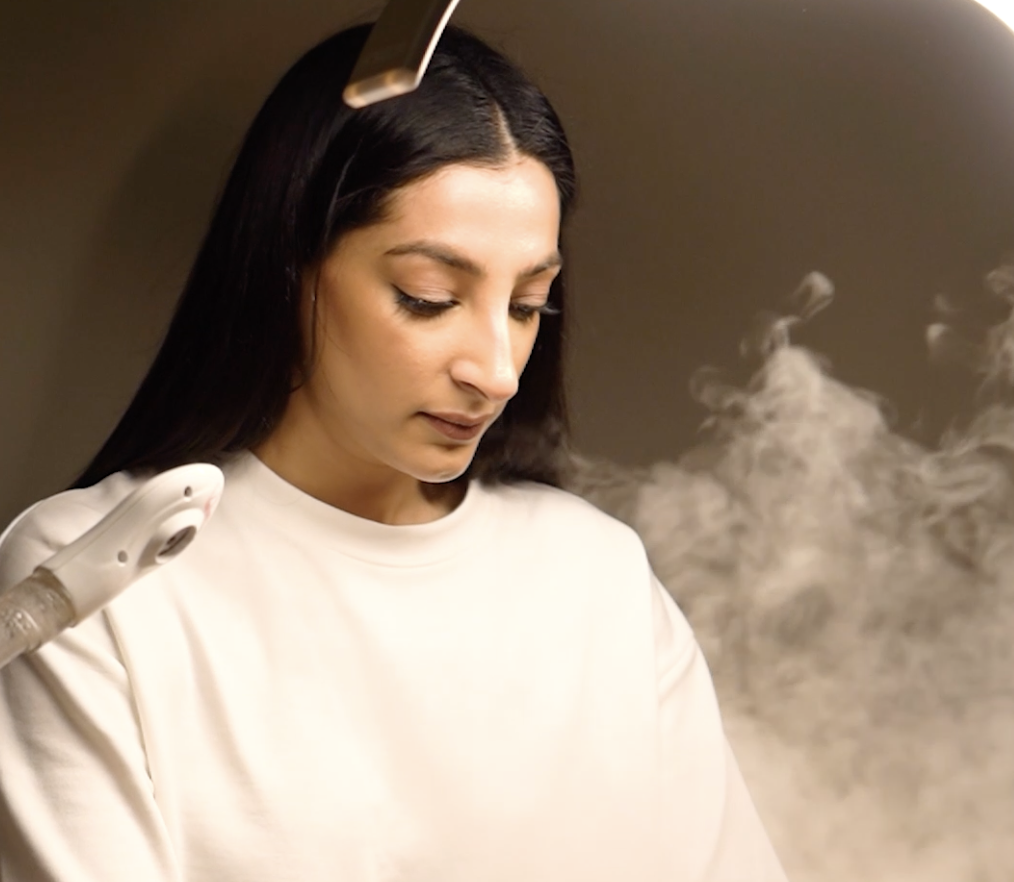
If you have been treating your skin for years and it is still not getting better, root cause skin health offers a different explanation. The treatment is the problem. Not the product. Not your routine. The fundamental approach.
Conventional dermatology operates on a surface model. It identifies a presentation (acne, rosacea, eczema, hyperpigmentation, premature ageing) and matches it to an intervention targeted at that presentation. Retinoids for acne. Topical steroids for eczema. Laser for pigmentation. The skin is treated as a standalone organ with a standalone problem requiring a standalone solution.
This model fails a significant proportion of people because it is built on a false premise. The skin is not a standalone organ. It is the most visible output of an internal physiological environment. When that environment is dysregulated, when systemic inflammation is elevated, when the gut microbiome is compromised, when cortisol is chronically high, when nutrient status is depleted, the skin reflects it. Precisely and consistently.
Root cause skin health means treating the internal environment that your skin is expressing, not suppressing the expression.
This is what functional medicine brings to skin health. And it is the clinical model at the foundation of every skin treatment Regenisense delivers.
Why the Skin Is the Last to Know and the First to Show It
The skin is the body’s largest organ. It is also, in terms of biological priority, not high on the list. When resources are constrained and physiological stress is elevated, the body directs energy, nutrients, and repair capacity toward organs it considers essential for survival: the heart, the brain, the adrenal glands. The skin waits.
This means that by the time a skin condition becomes chronic, persistent, recurring, resistant to topical treatment, the internal environment has usually been dysregulated for considerably longer than the skin symptoms suggest. The acne that appeared at 28 may represent an internal inflammatory state that has been building since your mid-twenties. The rosacea that worsened in your thirties is frequently downstream of gut dysbiosis and immune dysregulation that predates the skin presentation by years.
Treating the skin alone at that point is the clinical equivalent of painting over damp. The presentation temporarily improves. The underlying cause continues to drive it. The condition returns.
Root cause skin health requires mapping the internal environment first. The skin is the diagnostic clue. It is not the diagnosis.
The Four Internal Drivers of Chronic Skin Conditions
1. Gut Dysbiosis and the Gut-Skin Axis
The connection between gut health and skin condition is one of the most robustly evidenced relationships in functional medicine. The gut-skin axis describes a bidirectional communication network through which systemic inflammation originating in a dysregulated gut manifests directly on the skin.
When the gut microbiome is imbalanced, through antibiotic use, ultra-processed food, chronic stress, or pharmaceutical medication, the integrity of the intestinal wall is compromised. Bacterial endotoxins and incompletely digested proteins enter systemic circulation. The immune system, encountering these foreign substances in the bloodstream, mounts an inflammatory response that expresses itself through the skin.
The clinical evidence is specific and compelling. Mendelian randomisation studies demonstrate a causal relationship between gut microbiota composition and rosacea. Research consistently identifies gut dysbiosis, including small intestinal bacterial overgrowth, as a significant driver of rosacea pathogenesis, with oral probiotic supplementation showing measurable clinical improvement in skin presentation. Acne, atopic dermatitis, psoriasis, and eczema all show consistent associations with specific patterns of gut microbiome disruption across peer reviewed literature.
The skin cannot be properly addressed without addressing the gut that is driving it. This is not an alternative medicine position. It is the current state of the clinical evidence.
2. Chronic Stress and Cortisol
The relationship between psychological stress and skin condition is not anecdotal. It is physiologically precise, and recent clinical research has mapped exactly how chronic cortisol elevation damages the skin at a cellular level.
Research published in the Journal of Cosmetic Dermatology demonstrated that elevated cortisol directly suppresses filaggrin synthesis in skin keratinocytes by up to 32 percent at clinically relevant concentrations. Filaggrin is the primary structural protein responsible for maintaining skin barrier integrity. When it is depleted, the barrier breaks down. Moisture escapes. Environmental triggers penetrate. Inflammatory responses are amplified.
The same research confirmed that chronic cortisol elevation significantly downregulates collagen type I and type III synthesis while simultaneously impairing the enzymatic networks responsible for elastin integrity and hyaluronic acid production. The result is accelerated structural skin ageing, impaired wound healing, and a skin barrier that is chronically compromised at a molecular level.
Chronic stress triggers specific dermatoses, including psoriasis, atopic dermatitis, acne, and alopecia areata, through the sustained release of cortisol and epinephrine. This is the mechanism behind the observation that skin conditions reliably worsen during periods of psychological stress. The nervous system is directly regulating skin barrier function. When the nervous system is in a sustained state of activation, the barrier suffers accordingly.
Addressing skin health without addressing the stress physiology driving it produces incomplete results. Always.
3. Nutrient Deficiency and Micronutrient Status
The skin’s capacity to regenerate, maintain barrier function, produce collagen, regulate inflammation, and resist environmental damage is entirely dependent on micronutrient availability. Chronic nutrient deficiency, even subclinical deficiency that does not register on a standard blood panel, directly undermines every one of these functions.
Zinc is essential for keratinocyte proliferation, wound healing, and the regulation of sebum production. Deficiency is directly associated with acne severity and impaired barrier repair. Vitamin C is a critical cofactor in collagen synthesis. Deficiency impairs the structural integrity of every collagen fibre the skin produces. Vitamin D regulates skin immune function and antimicrobial peptide production. Omega-3 fatty acids govern the lipid matrix that maintains the skin barrier’s impermeability.
These deficiencies are common. They are driven by gut malabsorption, poor dietary quality, high physiological stress load, and the broader nutrient depletion that characterises modern living in the UK. They are also almost never assessed in standard dermatological consultations, because standard dermatology does not operate from a nutritional medicine framework.
Functional medicine assessment identifies the specific micronutrient deficiencies present in an individual’s physiology and addresses them directly, including through IV therapy that bypasses gut absorption entirely to deliver nutrients at therapeutic concentrations directly into circulation.
4. Skin Barrier Dysfunction: The Structural Problem Beneath the Surface
Peer reviewed research consistently identifies skin barrier dysfunction as the initiating and perpetuating mechanism across the spectrum of chronic inflammatory skin conditions, including atopic dermatitis, psoriasis, rosacea, acne, and ichthyoses. Disruptions in lipid composition, filaggrin deficiency, and compromised tight junction integrity contribute to disease chronicity by creating a skin environment that is structurally unable to contain inflammation or resist external triggers.
This is not a surface problem. The barrier is built from the inside out. Its structural components, ceramides, fatty acids, cholesterol, and the proteins that regulate their production, are synthesised by cells whose function is governed by nutrition, hormonal environment, gut health, and systemic inflammation. Treating barrier dysfunction with topical emollients addresses the downstream consequence. It does not address the upstream physiology that is preventing the barrier from building and maintaining itself properly.
Root cause skin health means restoring the physiological conditions under which the skin can regenerate its own structural integrity rather than perpetually requiring external support to compensate for internal deficiency.
Why Conventional Dermatology Misses Root Cause Skin Health
Conventional dermatology is built on a pharmaceutical and procedural model. Its framework is: identify the condition, match to protocol, prescribe or treat. The model produces results for straightforward presentations and acute conditions. It consistently fails people with chronic, recurring, or treatment-resistant skin conditions because those presentations are almost always systemic rather than local.
The dermatologist who prescribes a long course of antibiotics for persistent acne is not being negligent. They are applying the standard of care within their framework. What they are not doing is investigating the gut dysbiosis that the acne is expressing, the cortisol-driven barrier dysfunction that is making the skin susceptible, or the zinc and omega-3 deficiency that is impairing the repair mechanisms that would otherwise resolve the condition independently.
The prescription addresses the bacterial component of the acne presentation. It simultaneously disrupts the gut microbiome further, compounding the root cause. The skin clears temporarily. The acne returns because the internal environment has not changed.
This is the cycle that defines the experience of the majority of people with chronic skin conditions. They are not treatment failures. They are being treated at the wrong level.
The Rejuvenate Approach: Clinical Precision at Every Layer
At Regenisense, every skin treatment begins with a clinical consultation that maps the internal environment – root cause skin health is the operating principle. We do not treat skin conditions in isolation. We assess the gut, the stress physiology, the nutritional status, and the hormonal environment producing the skin presentation, alongside the skin itself.
From that assessment, a bespoke treatment plan is designed that addresses both the internal drivers and the skin directly, simultaneously and at clinical precision. Before any treatment begins, we run functional testing to assess the internal drivers behind what the skin is presenting. This goes beyond a standard blood panel. We look at gut health markers, inflammatory load, hormonal balance, and micronutrient status, giving us a precise physiological picture that a dermatological consultation simply does not produce. The treatment plan is built from that data, not from the presentation alone.
Microneedling is the foundation of our clinical skin regeneration protocols. The mechanism is precise: controlled micro-injury stimulates the skin’s wound healing cascade, triggering fibroblast migration and the production of new collagen and elastin through a process called percutaneous collagen induction. Peer reviewed evidence across 70 studies confirms collagen and elastin production, improved epidermal barrier function, and significant improvement in skin texture, elasticity, and structural integrity as primary outcomes. This is not cosmetic intervention. It is clinical stimulation of the skin’s intrinsic regenerative capacity.
Exosome therapy represents the leading edge of skin regeneration science. Exosomes are nano-sized extracellular vesicles that carry bioactive signalling compounds between cells, regulating proliferation, collagen synthesis, inflammation, and repair. Clinical evidence demonstrates their capacity to promote fibroblast proliferation, stimulate collagen synthesis, enhance angiogenesis, and accelerate tissue regeneration. Applied in conjunction with microneedling, exosomes are delivered directly into the dermal layer where they amplify and extend the regenerative response that microneedling initiates. A 12-week randomised split-face study found that the combination of microneedling with exosomes produced significantly greater improvement in facial skin ageing parameters than microneedling alone.
Polynucleotide therapy works at the cellular level to stimulate fibroblast activity, accelerate tissue regeneration, and restore the structural architecture of ageing or damaged skin. It is particularly effective for skin quality, fine lines, and conditions where the structural matrix requires rebuilding rather than simply stimulating collagen production.
Bespoke clinical facials are formulated around each individual’s specific skin profile and internal assessment rather than generic skin type categories. Every active ingredient selection, penetration method, and treatment sequence is determined by what the individual’s physiology actually requires. Every facial includes a dedicated head, face, and neck massage sequence that goes well beyond the token massage found in high street treatments. Lymphatic drainage stimulates the lymphatic vessels beneath the skin to clear metabolic waste, reduce puffiness, and support immune function at a tissue level. The deliberate pressure and rhythmic movement of therapeutic touch activates the parasympathetic nervous system, shifting the body out of the chronic stress state that, as we have established, is actively degrading your skin. Research consistently links therapeutic touch and massage to measurable reductions in cortisol and elevations in oxytocin. For clients carrying high physiological stress load, this is not an indulgence bolted onto the end of a treatment. It is a clinical intervention in its own right, addressing one of the four primary internal drivers of chronic skin conditions from the inside out.
The internal dimension, nutritional support, gut health optimisation where indicated, and stress physiology work through our Rise pillar where relevant, runs alongside the clinical skin treatments. Because a skin that is being treated externally with clinical precision while being undermined internally by gut dysbiosis, elevated cortisol, or nutrient deficiency will not achieve the results it is capable of.
The skin responds to a complete approach. That is what we deliver.
The Skin You Are Living In Is Not Fixed
If you have spent years cycling through products, protocols, prescriptions, and treatments with results that never quite hold, the model you have been applying is the problem. Not your skin.
The skin is extraordinarily capable of regenerating, repairing, and restoring itself when the internal and external conditions that enable it to do so are in place. When those conditions are absent, no topical treatment, however sophisticated, will produce lasting results. It will manage the presentation. It will not resolve the cause.
Root cause skin health is not a philosophy. It is a clinical methodology. It produces results that surface-level treatment cannot, because it addresses the full picture rather than the visible fraction of it.
If you are ready for a different approach, built on genuine investigation, clinical precision, and treatments that work with your physiology rather than around it, the starting point is a consultation with Pooja at Regenisense.
Educational content only. Not medical advice. Suitability, benefits, and risks vary between individuals and are assessed at clinical consultation. Regenisense is a private wellness clinic, not a diagnostic medical service.